
Roofing Marketing: How to Get More Roofing Leads (and Actually Answer Them)
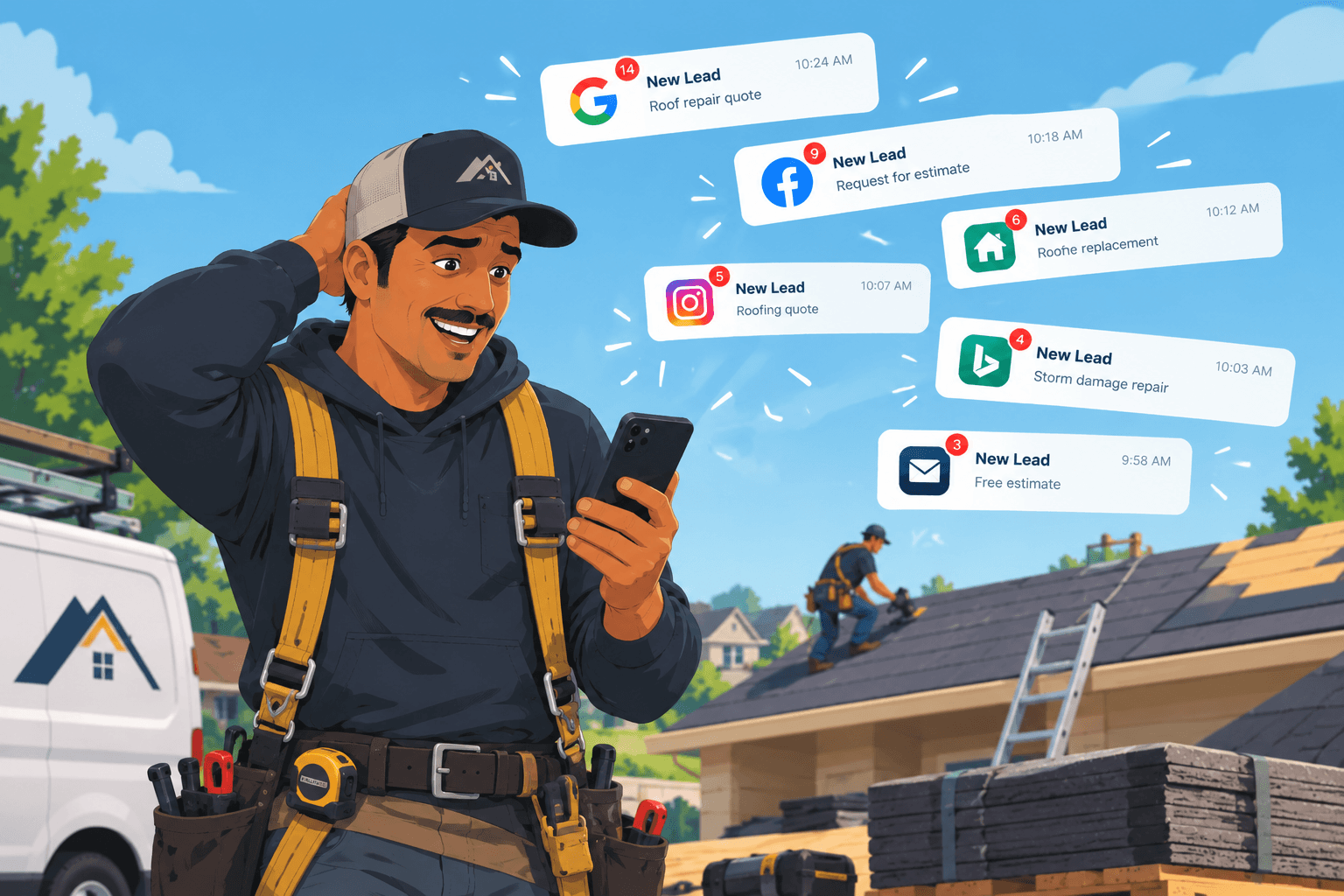
Roofing marketing has two halves, and most contractors only fund one. The first is generating high-ticket leads through local search, your Google Business Profile, Local Services Ads, and Google Ads. The second is what happens after the phone rings or a form comes in. If nobody answers, or the lead sits unread in an inbox, you paid to generate revenue and then dropped it.
The stakes show up in the numbers. 'Roofing leads' gets searched about 1,300 times a month in the US, and advertisers pay roughly $48 per click to compete for that traffic. Storm callers don't shop around — they call whoever picks up first.
This guide covers both halves: how to attract more roof replacement and storm repair leads, and how to make sure every one gets answered, routed, and followed up until it's booked. Grand River Labs focuses on that second half, because it's where most roofing marketing plans fall apart.
The Two Halves of Roofing Marketing: Lead Generation and Lead Accuracy
Most conversations about roofing marketing stop at one half of the job: getting the phone to ring. Local SEO, your Google Business Profile, Local Services Ads, Google Ads, and email campaigns all exist to generate leads. That half matters, especially for high-ticket work like roof replacement and storm repair, where a single job carries serious margin. It's also where most of your budget goes.
The other half gets far less attention: lead accuracy. That's everything that happens in the minutes after someone reaches out. Storm callers are urgent and high-intent, and they tend to hire whoever answers first. If a lead lands in an inbox nobody watches, or sits unanswered while the homeowner dials the next roofer, that's money already spent on a job you'll never see.
Here's the uncomfortable part: weakness in either half produces the same result. Strong lead generation with sloppy follow-up books fewer jobs than it should. Airtight follow-up with thin generation gives you tidy processes and an empty pipeline. The two only pay off together — every lead answered, routed to someone who's watching, and followed up until it's booked or closed.
So the framing to keep is this: roofing marketing isn't just demand creation. It's demand creation plus response. A lead that never gets answered isn't a lead. It's an expense you already paid for.
Where High-Ticket Roofing Leads Come From: Local SEO and Google Business Profile
When a homeowner needs a roof replacement or storm repair, they don't spend weeks comparison shopping. They search 'roofer near me' or 'storm damage roof repair,' scan the map pack, and start calling down the list. That's what makes local SEO and your Google Business Profile the foundation of roofing marketing for high-ticket work.
Local SEO is what puts you in front of those searches: consistent business information across directories, service pages built around the jobs you actually want, and reviews that prove you show up and finish what you start. Done well, it compounds — visibility you earn can keep producing leads long after an ad budget runs dry.
Your Google Business Profile carries much of that weight. A complete profile — accurate categories, service areas, hours, real photos of finished jobs, and reviews you actually respond to — is often the first thing a prospect sees before they ever reach your website.
The demand backs this up. 'Roofing leads' alone draws about 1,300 US searches a month, and advertisers pay roughly $48 a click to compete for that traffic. Being visible when those searches happen is how you get the call instead of hearing about the job later.
After a storm, urgency spikes and homeowners call whoever answers first. They can't call you if you're not on the list. Visibility earns the call; what happens next decides whether it was worth earning.
Local Services Ads and Google Ads: Capturing Urgent Storm-Repair Calls
Local SEO and a well-kept Google Business Profile build visibility over months. After a hailstorm, homeowners don't wait for rankings to shift — they need someone on their roof this week. That's the fit for Local Services Ads: they sit above traditional search results, and you pay per lead rather than per click. The homeowner searching the night of a storm is often the one who signs a contract, so that placement matches the intent.
Google Ads covers the rest of the urgent demand: emergency roof repair, hail damage, wind damage, tarping. Someone searching those terms at nine at night with water dripping through the ceiling isn't comparing portfolios. They're calling down the list until someone picks up, and whoever answers first usually wins the job. Both channels also let you point your spend at high-ticket work like roof replacement and storm repair instead of spreading it across small repair calls.
This is where the two halves of roofing marketing meet. If your ads produce a call that lands in voicemail, the spend bought a lead you never spoke to — and storm callers rarely leave messages. The advertising has to be paired with answering, routing to a monitored inbox, and following up until the job is booked. One booked roof replacement can justify months of ad spend, which is why response matters as much as reach.
The math is what makes roofing different from most home services. National averages put a full roof replacement at about $9,500, with most homeowners spending $10,000 to $30,000. For an established roofing company — the median roofing contractor does roughly $2 million a year in revenue — one extra booked replacement covers months of marketing spend. That's the affordability test most trades can't pass: the job values are large enough that a serious marketing investment pays for itself in a job or two, not a year.
Why an Unanswered Roofing Lead Is Revenue You Paid to Generate and Dropped
Every roofing lead you receive has a receipt attached. Maybe it came from a Google Ad you pay for by the click, a Google Business Profile you spent time optimizing, or months of local SEO work. None of these leads are free, and when one goes unanswered, the money behind it doesn't come back.
Roofing leads are among the most expensive in home services, because roof replacement and storm repair are high-ticket jobs. One keyword data source puts clicks for 'roofing leads' searches at roughly $47.81 each. If it takes several clicks to produce one call and nobody picks up, you paid for all of them and kept nothing.
Storm leads sharpen the problem. A homeowner with a tarp on the roof or water coming through the ceiling isn't comparison shopping. They're working through a call list, and the job goes to whoever answers first. A voicemail greeting or a form sitting in an unchecked inbox hands the work to the next roofer on that list.
That's why treating lead handling as separate from roofing marketing is a mistake. Generation is half the system. The other half is making sure every lead gets answered, routed to an inbox someone actually monitors, and followed up until it's booked or closed. Skip that half and you're not just losing jobs — you're funding the marketing of the contractors who answer faster than you do.
Answering, Routing, and Following Up: Email Marketing, CRM Automation, and AI Automation
Generating leads is only half of roofing marketing. The other half starts in the minutes after a lead lands. A homeowner with a storm-damaged roof doesn't wait around for a callback, and storm callers go to whoever answers first. If a form submission sits in an inbox nobody checks, that lead was paid for and never worked. That's not a weak-ads problem. It's a revenue leak.
Email marketing covers the people who aren't ready today. Roof replacement is a considered purchase — homeowners collect quotes, wait on insurance, and put the decision off for weeks. A steady email flow keeps you the contractor they remember when the timing finally changes.
CRM automation handles routing. Every lead, whether it comes from Local Services Ads, Google Ads, or a form fill, lands in a monitored inbox where it gets answered instead of lost on a personal phone or in a spam folder. AI automation then carries the follow-up: quick acknowledgments, reminders, and check-ins that keep the thread alive until the job is booked or clearly closed.
This is the piece most roofing marketing plans skip. They stop at traffic and calls and leave response to chance. Grand River Labs treats answering, routing, and follow-up as part of the same system as lead generation, because on high-ticket jobs like roof replacement and storm repair, the contractor who responds first usually gets the work.
What a Fractional Digital Department Handles for Roofing Contractors
A fractional digital department is a full marketing team you plug in instead of building one in-house. It's built for the established roofing company — the one running multiple crews, with an office that's already busy, money already going out the door on ads, a Google Business Profile, and maybe a lead vendor or two, but no single person who owns the whole engine. Rather than a scattered set of channels and freelancers that never talk to each other, you get one group that owns your roofing marketing end to end.
On the generation side, that means the channels high-ticket jobs actually come from. Local SEO puts you in front of homeowners searching for roof replacement or storm repair. A managed Google Business Profile keeps your map listing, reviews, and call button working. Local Services Ads and Google Ads capture urgent, high-intent searchers, and email marketing keeps past customers and referral networks warm between storms.
The other half is what happens after someone raises their hand. CRM automation routes every lead to a monitored inbox, so nothing sits buried in a voicemail box or a spam folder nobody checks. Automated follow-up keeps working the lead — confirming details, nudging after hours, and staying on it until the job is booked. That matters most with storm damage, because those callers are urgent and usually hire whichever contractor answers first.
Run this way, both halves work at once. That's the idea behind Grand River Labs: the leads you paid to generate end up as booked jobs instead of getting dropped somewhere in the middle.
FAQ
What is roofing marketing, and why does it have two halves?
Roofing marketing is how you get your company in front of homeowners who need a roof — local search visibility, your Google Business Profile, Local Services Ads, Google Ads, and follow-up email. It has two halves because getting found is only part of the job. The other half is lead accuracy: what happens after someone calls or submits a form. Every lead needs to be answered, routed to a monitored inbox, and followed up until it's booked. Roof replacement and storm repair leads are urgent — a storm caller usually goes with whoever answers first. If a lead sits unanswered, you paid to generate it and then dropped it.
Which roofing marketing channels generate high-ticket jobs like roof replacement and storm repair?
For high-ticket jobs, focus on channels where intent is already high. Local SEO and an optimized Google Business Profile put you in front of homeowners searching for roof replacement or storm repair nearby. Local Services Ads and Google Ads capture that same urgency at the exact moment someone needs help, which matters most after a storm when callers go to whoever answers first. Email marketing and CRM automation keep slower-cycle prospects warm until they're ready to book. The common thread is that every channel works better when each lead gets answered, routed to a monitored inbox, and followed up until booked.
Why do roofing leads go unanswered, and what does that cost a roofing company?
Most roofing leads go unanswered for simple reasons: your crew is on a roof, the office phone rings out, an email sits in spam, or nobody owns follow-up. It's usually a system problem, not a motivation problem. The cost adds up fast. A single click on a roofing leads search can run close to $48, so every missed call is ad spend you already paid for and then dropped. You also lose the job itself, and with high-ticket work like roof replacement, one missed lead can outweigh a month of marketing. Storm callers are the worst case, because they're urgent and book with whoever answers first.
How quickly does a roofing company need to respond to a storm lead?
Storm leads are urgent. A homeowner with a damaged roof is often calling several companies at once, and the job tends to go to whoever answers first. If a call goes to voicemail or a form submission sits unread for an hour, you've likely already lost that lead. Speed has to be built into your roofing marketing, not bolted on afterward. Every lead should be answered, routed to a monitored inbox, and followed up until the job is booked. For storm work especially, minutes matter more than a polished pitch — the contractor who picks up usually wins.
What does a fractional digital department handle for a roofing contractor?
Think of it as your marketing and lead-handling team without the overhead of full-time hires. On the generation side, it covers local SEO, your Google Business Profile, Local Services Ads, Google Ads, and email marketing. On the accuracy side, it makes sure every lead gets answered, routed to a monitored inbox, and followed up until it's booked — which matters after a storm, when callers go to whoever picks up first. It also handles CRM and AI automation so follow-up stays consistent. The focus is high-ticket work like roof replacement and storm repair, where a missed lead is revenue you paid to generate and then dropped.