
Tree Service Marketing: How to Get More Tree Service Leads (and Actually Answer Them)
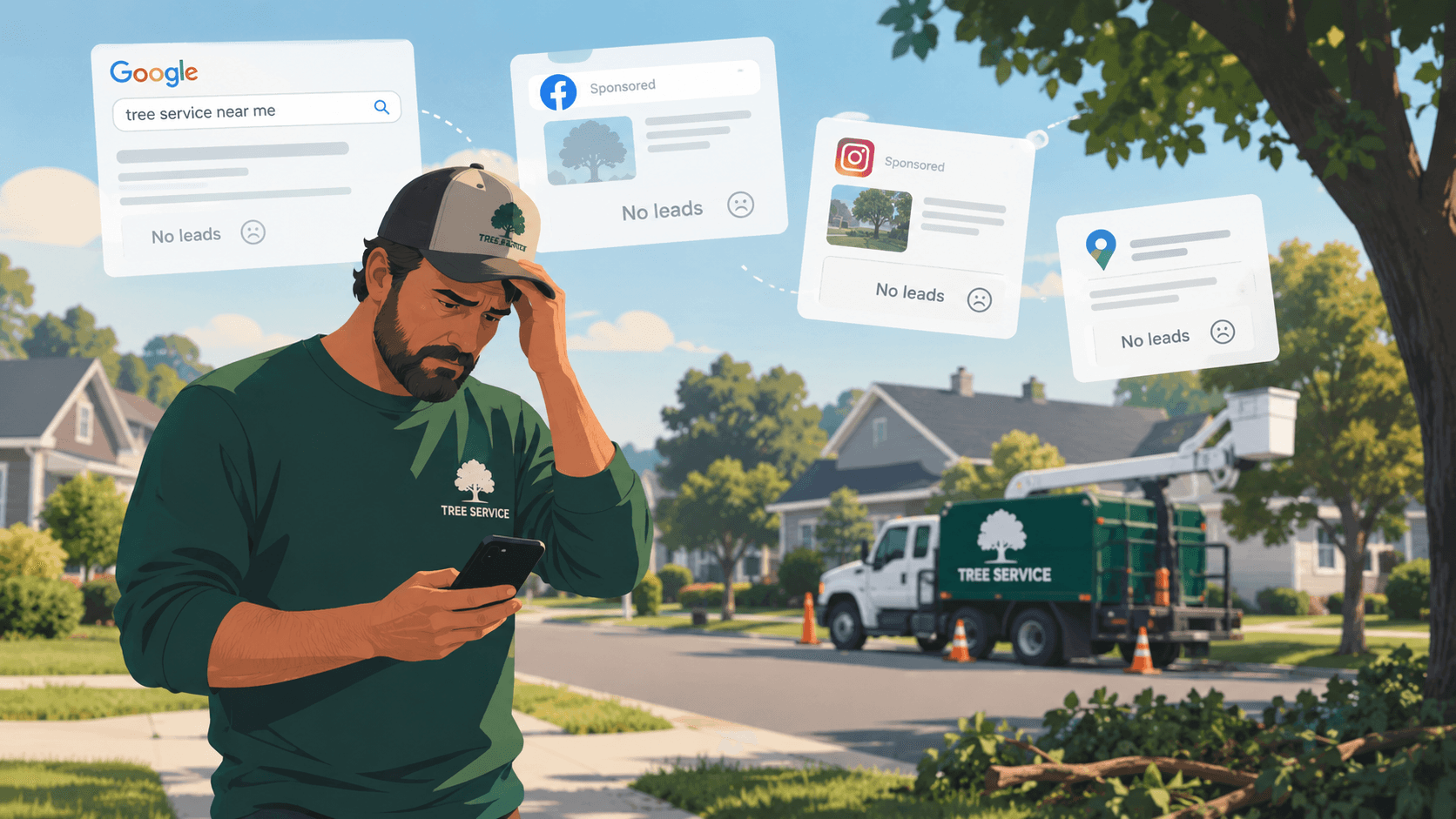
Tree service marketing usually gets explained as a lead problem: rank in local search, show up on Maps, run Local Services Ads, and wait for the phone to ring. That's half the picture. A lead that never gets answered isn't a lead — it's revenue you paid to generate and then dropped.
It matters more in tree work than in most trades, because the money sits in high-ticket jobs: tree removal, land clearing, and storm cleanup. Miss the call on a removal estimate and you may have just lost the biggest job of your season. The demand backs that up: "tree service leads" gets searched about 320 times a month in the US, and advertisers pay an average of nearly $49 per click to appear on those searches — before a single estimate is booked.
Grand River Labs works the problem from both ends. As a fractional digital department for home services contractors, it runs the lead generation side — local SEO, Google Business Profile, Local Services Ads, and conversion-focused websites — and then makes sure every lead gets answered, routed to a monitored inbox, and followed up. This post walks through how to build that kind of system for your tree service.
What Tree Service Marketing Actually Includes
Tree service marketing has two halves, and most advice only covers one. Guides on getting more tree service leads will hand you a list of channels — rank here, advertise there — and then go quiet about what happens when someone actually calls.
The first half is lead generation. Local SEO puts you in front of homeowners when they search for tree work in your area. A Google Business Profile keeps you visible in Maps and the local results. Local Services Ads reach people who are ready to hire, not just browsing. And a conversion-focused website holds the whole thing together — a site where a visitor can find your number, see what you do, and send a quote request without hunting around.
The searches themselves tell you who's calling. Someone typing 'tree removal near me' or 'land clearing' has a specific job in mind, and usually one of the bigger ones. That's why positioning aimed at high-ticket work — tree removal, land clearing, storm cleanup — matters so much in this trade. These searches come from people with real jobs on their properties, not readers killing time.
The second half is what happens after a lead comes in. Someone answers the call. The lead gets routed to a monitored inbox so it doesn't sit unread somewhere nobody checks. Then it gets followed up until it's booked or closed out. That half matters more in tree work than in most trades, because removal and cleanup jobs usually collect several bids before anyone commits. The company that answers first and keeps following up stays on the shortlist.
Skip the second half and the first half stops mattering. A lead that never gets answered is just missed revenue — and when the call was about a removal or a storm cleanup, it's the expensive kind.
How to Get More Tree Service Leads from Local Search
Most tree service leads start with a search. Someone types tree removal into their phone, and Google shows a map with local results next to the regular listings. Showing up there comes down to three things working together.
Your Google Business Profile is what appears in Maps and the local results, so it needs to be complete and accurate. Local SEO makes sure your site and profile rank for the searches people near you actually run. Local Services Ads put you at the top of the same page, in front of searchers who are ready to hire.
Then there's where the click lands. A conversion-focused website gives those visitors a clear reason to call you and an easy way to do it. That's the full loop: show up, earn the click, and make contacting you effortless. What happens next belongs to the answering side.
Positioning for High-Ticket Jobs: Tree Removal, Land Clearing, and Storm Cleanup
Not every tree job is worth the same. The money in tree work sits in high-ticket jobs: tree removal, land clearing, and storm cleanup. Miss the call on a removal estimate and you may have lost one of the biggest jobs of your season.
That should shape how you market. The services you feature, the pages on your website, and the ads you run should point at the work you actually want more of. There's no reason to treat a small trim the same as a full removal, because the payoff isn't the same.
High-ticket callers also tend to be in a hurry, especially after a storm. Positioning and response speed go together for that reason. The company that answers first usually gets the estimate, and the estimate usually decides the job.
Why Unanswered Leads Sink Most Tree Service Marketing
Most tree service marketing fails after the lead arrives, not before. You can rank well, run ads, and have a clean website, and still lose the revenue if calls go to voicemail and form submissions sit in an inbox nobody watches.
It isn't carelessness. You're running a tree service, and you're often on a job site when the phone rings. You might be up in a bucket, feeding a chipper, or hauling storm debris, and answering the phone isn't what anyone on the crew is there to do.
The person calling doesn't wait around, either. Tree work calls tend to be urgent. A limb is hanging over the driveway. A tree came down across a fence. Someone wants a removal priced before the next storm rolls in. When nobody picks up, they don't leave a message and hope. They move on to the next company on the list, and the work usually goes to whoever answers first.
That's the quiet leak in most marketing budgets. Money spent on lead generation only pays off if someone answers what it produces — and at roughly $49 a click on tree-service-lead searches, that's real money being generated and then dropped. A lead that never gets answered isn't really a lead. It's missed revenue, and it's the most preventable kind.
The leak persists because most marketing help draws a line at the lead. Rankings, ads, and websites are all built to produce contacts. What happens to a contact after it arrives gets treated as your problem — something to manage with whatever habits and systems you can piece together between jobs.
That split costs the most on the high-ticket work: tree removal, land clearing, storm cleanup. Those are the jobs tree service marketing exists to win, and a single unanswered call can be the difference between booking one and never knowing it existed.
Setting Up Lead Answering, Routing, and Follow-Up
Getting the lead is only half the job. What happens in the minutes after it arrives decides whether it turns into booked work, and that's where tree service companies lose money quietly.
Think about how a homeowner behaves when they need a tree removed. If a storm left a limb on the roof, they aren't filling out one form and waiting patiently. They're calling the next company on the list. The same urgency applies to land clearing and storm cleanup — when the job is big, speed matters. Whoever responds first has a real advantage, and whoever never responds doesn't get a second chance.
The fix is a simple loop that runs on every lead, every time.
Every lead gets answered. Every call gets picked up and every form submission gets acknowledged, so nothing waits in a voicemail box or an unwatched inbox. It's worth being honest about how often this already slips on a busy removal day, because a customer can't tell the difference between a swamped crew and a company that doesn't want the job.
Every lead also gets routed to monitored inboxes, so nothing lands somewhere it can be forgotten. Someone is accountable for each lead from the moment it arrives. If a lead ends up in a personal inbox or a voicemail nobody checks, it doesn't matter how good the marketing that produced it was.
Finally, every lead gets followed up until it's booked or clearly closed out. One attempt and silence isn't follow-up. Homeowners miss calls, get busy, and put off decisions, so polite, professional persistence closes jobs that a single contact would have lost.
None of it is complicated, but it has to be set up deliberately and it has to run without gaps. That's the step most tree service marketing advice skips, because most agencies consider the work done the moment the lead is delivered.
One Fractional Digital Department Instead of Multiple Vendors
The usual setup for a growing tree service is a patchwork: one vendor for SEO, another running ads, a web person on a different schedule, and nobody responsible for what happens after a lead comes in. Every handoff is a place where a lead can slip.
Grand River Labs replaces that patchwork with a single fractional digital department for home services contractors. One team handles the implementation end to end: the local SEO, Google Business Profile, Local Services Ads, and conversion-focused website that generate leads, plus the answering, routing, and follow-up that make sure every one of those leads gets worked. No parallel vendor workflow, no gaps between vendors, and one point of accountability for the whole lead flow, from first click to booked job.
FAQ
- What is the best way to advertise a tree service?
- The best advertising for a tree service usually starts where people actually look when a tree comes down or a lot needs clearing: local search. That means a complete Google Business Profile, Local Services Ads so you show up for calls in your area, local SEO that targets high-ticket jobs like tree removal, land clearing, and storm cleanup, and a website built to turn visits into quote requests. Then there's the part most companies skip: answering every lead quickly, routing it to a monitored inbox, and following up until someone books. That second half is what turns advertising spend into booked jobs.
- How to get more tree service leads?
- To get more tree service leads, start where people actually search: your Google Business Profile, local SEO, and Local Services Ads put you in front of homeowners when they need tree removal, land clearing, or storm cleanup. A conversion-focused website then turns that traffic into quote requests instead of just visits. But leads only count if someone answers them. A missed call after a storm often means the job goes to whoever picks up first. Generating leads and making sure every one gets answered, routed, and followed up is what turns interest into booked work.
- How quickly should a tree service company answer new leads?
- As fast as you realistically can — ideally while the person is still thinking about their tree problem. Someone searching for tree removal or storm cleanup is often in a hurry, and if you don't answer, they'll call the next company on the list. A lead that sits until tomorrow may already be gone, so treat every one like it has a short shelf life. This is the part of tree service marketing most companies neglect: they spend on ads and SEO, then let inquiries pile up in an inbox nobody checks. Making sure leads get answered, routed to monitored inboxes, and followed up is what keeps that spend from leaking away.
- What is a good slogan for a tree service?
- A good slogan is short, easy to remember, and speaks to the outcome a customer wants. For a tree service, that usually means safety and a clean finish, since most calls come from tree removal, storm cleanup, or land clearing. Aim for five to eight words, skip jargon, and lead with the benefit, like safe takedowns or a yard left spotless. Then use it consistently on your trucks, your website header, and your Google Business Profile so it repeats wherever people find you. A slogan won't win jobs on its own, but it makes your name easier to recall when a storm hits.
- Can a tree service company handle marketing without juggling multiple vendors?
- Yes. Grand River Labs operates as a single fractional digital department for home services contractors, so you work with one team instead of coordinating an SEO agency, a web designer, an ads manager, and someone to answer the phone. The company handles local SEO, your Google Business Profile, Local Services Ads, and a conversion-focused website, then carries the work through to lead answering, routing to monitored inboxes, and follow-up. Implementation happens end-to-end, so there's no parallel vendor workflow where leads slip through the cracks. If you're going after high-ticket jobs like tree removal, land clearing, or storm cleanup, one accountable team keeps tree service marketing simpler and your lead flow tighter.